Friday, November 4, 2022

Assignment: 202 Indian English Literature post Independence

 Name – Janvi Nakum

Paper-  202 Indian English Literature  Post Independence 

Roll no- 11

Enrollment no –4069206420210020

Email id – janvinakum360@gmail.com

Batch- 2021-2023(M.A. Sem – 3)

Topic : Post-Feminists analysis of female characters in Mahesh Dattani’s Final Solutions

Submitted to – S.B. Gardi Department of English Maharaja Krishnkumarsinhji Bhavnagar University


Mahesh Dattani 


He was born (1958) in the city of Bangalore, though his parents originally belonged to Porbandar in Gujarat. He started his own theatre group named Play Pen in 1984. His plays are performed at his studios and he encourages novice artists to participate in dramatic activities. Dattani has also been teaching drama course at the Summer Program of Portland State University.

. He has written a good number of dramas which are diverse in themes, techniques and devices. He has greatly expanded new horizons in Indian Drama by not only focusing on the themes of conflict between tradition and modernity, communal tensions, identity crisis and inequality but also touching up radical themes ranging gay, child abuse, transgender, HIV positives and physically challenged. Being a multifaced literary and dramatic figure, Mahesh Dattani has given a new height and dimension to Indian English Drama by writing more than a dozen plays. The American playwrights Tennessee Williams and Arthur Miller have influenced him on the matter of stagecraft and other techniques and devices. But he had a very strong urge and affinity for Indianness. He has made sincere efforts for making stage befitting the Indian milieu. He also uses a good number Gujarati, Kannada and Hindi words in his plays.

His Works

1.Dance Like a Man (1989), 


Tara (1990), 

Bravely Fought the Queen (1991) 


 Final Solutions (1992) for which he won the prestigious Sahitya Academy Award in 1998.


Needful (1997),

 Seven Steps Around the Fire (1998),


 Clearing the Rubble (1998),

On a Muggy Night in Mumbai (1998), 

30 Days in September (2001) 

 Brief Candle (2009)


Post-Feminists analysis of female characters in Mahesh Dattani’s Final Solutions


In Final Solutions, Dattani represents the female characters like Hardika, Smita and Aruna. They make realization that women are not a shadow of male. Today woman is making her spaces. She has a better understanding of realization of identity both inside and outside the family. A woman of liberal ideology views the situation as an individual and constructs the image of life beyond the specified ideology of religious and community-based prejudices. She retains the power to change the conventional thinking and to make better realization of her hidden potentials. She wants to take decision for herself and if it is right she can protest against those agencies who are responsible for her sublimation.

   The post-modern ideology suggested the way of interpreting the life condition beyond the set patterns of ideologies. It accepts that human experiences are persistently in a state of flux and it’s set pattern of ideologies becomes a burden for the free growth of the individual. In this new method of literary investigation, the feminist ideologies have also undergone a drastic change. It is not confined only to defend the cause of female emancipation and the spaces for the economic and social security of woman. The post-feminist interrogations of the female identity and female roles aim at the deconstruction of the constructed patriarchal structure. It has provided a wider canvas to construct the voice of women in family, society, professional life and personal relationship.

In post-feminists phase of feminism, female identity and female consciousness to assert their voice has been reflected in the diverse ways. Her individual strength helps her to express her potential in social, patriarchal and personal spaces.

Carden, who is one of the members of national organization of women presents her views:

I want to have in creating a new society … I want women to have something to say in their own lives … I have never reached my potential because of social condition. I am going to get the reward. I have been crippled. I want to see the kind of system that facilitates the use of potential. 

Feminine consciousness focusing to restore a position in the process of social justice. According to Mahesh Dattani a woman has the equal sensibility and better realization of feelings.

In the realism of Indian English drama, the theme of communal violence has successfully been presented by two eminent dramatists – Asif Currimbhoy in Refugee (1971) and Mahesh Dattani in Final Solutions (2005). In Final Solutions, Dattani uses his pen to present the insecurity and mental crisis of the victims of partition. In this play, his intention is not to construct the dark pages of Indian history like that of Karnad’s Tughlaq but to deconstruct the lingering effect of the communal prejudices on the survivors of both the communities, Hindus and Muslims. He explores the psyche of discontent, exile, contempt, homelessness and alienation often affecting the sensibility of Hindus, Sikhs and Muslims. The communal animosity between the Hindus and Muslims have turned into the fatal disease affecting the peaceful existence of individuals in Indian subcontinent.

At the time of the creation of Final Solutions, Dattani was in search of a new theme representing Indian soil. In one of his talk delivered on 11th Feb. 2011 at Ravindra Kalakshetra as a part of Krishi Festival plays to celebrate the 50th anniversary of Bengali Theatre in Bangalore, he observed:

Man has created a very complex language called theatre. A language that has the ability to redefine the natural concepts of time, place and movements. A language that goes beyond the verbal, a movement that goes beyond physical. 

In Final Solutions, beyond the contentions of traditional language, he constructs the language of wounded psyche sharing the burden of communal hatred. Alyque Padmasee as a director of the play tried to investigate the hidden motive of the play and comments:

As I see it, this is a play about transferred resentment. About looking for a scope goal to hit out when we feel let down humiliated. Taking your anger on your wife, children, or servants is an old Indian custom. This is above all a play about a family with its simmering undercurrents.” 

This idea of anger justifies that Dattani was not motivated to make Final Solutions a political or an historical play. In her analysis of the play, Deepali Agarwal observes:

Mahesh Dattani puts the eternal question with his play Final Solutions that every now and then rankles our consciousness – are the human beings real humane. It propels us to perennial problems as to what’s that we should have priorities – our religion, our perennial ideals or our compassion for other human beings. 

In the play Final Solutions, Dattani represents the three female characters – Hardika, Smita and Aruna. He adopts an innovative narrative technique and the major dramatic events float through the consciousness of Hardika, the grandmother in Gandhian family. The dramatic conflict springs and develops through the reflection of Hardika whose consciousness remains rooted in the horrible events of partition that took place forty years back. The dramatic narration shifts between the present to 31st March 1948 when Hardika, the grandmother was a young girl of 14, known as Daksha and in her reflections she concludes that nothing as has changed and prejudices of communalism are haunting their consciousness continuously. In her diary entry, she mentions:

After forty years … I opened my diary again. And I wrote a dozen pages before. A dozen pages now. A young girl childish scribble. An Oldman's shaky scrawl, yes the things have not changed that much. 

She also makes mention of her father’s dream of independent India. In Final Solutions, Dattani projects multilevel stage to represent multiple layers of context involved in the issue of communal violence. In Daksha’s reflections and recollections of Diaries, Dattani exposes inner world of individuals encountering tensions and conflicts of personal relationships. She recollects the memories of her husband Hari and the friend Zarine. She also feels nostalgic for the melodious songs of Noor Jahan. In Final Solutions, Dattani uses two time spaces to indicate the construction of collective consciousness. Disrupting, Hardika’s flow of consciousness, Smita appears with the rumours of bombing the Muslim Hostel where her Muslim friend Tasneem live. The violence erupted after the sabotage of Hindu Rath Yatra. Curfew was clamped in the city. Ramanik, the father tries to divert the attention by a casual remark, “Wait a minute. That wasn’t a bomb.

Smita, Gandhi’s daughter talks to her friend Tasneem whose hostel was the center of blast. Smita, a girl of liberal ideology views the whole situation as an individual and constructs an ideology beyond the ideology of religious and racial prejudices. She reveals her feeling to her mother:

It stifles me! yes! May be I am prejudiced because I do not belong. But not belonging makes things so clear. I can see so clearly how wrong you are. You accuse me running away from my religion. May be I am embraced, Mummy. 

Through this observation of Smita, Dattani presents how the communal prejudices are constructed and how these lead to anger and hostility. Aruna, the mother and Smita, the daughter. Smita trifles that out of personal insecurity Javed left his home.

In Final Solution, the real anger and prejudice born out of communal frenzy, is rooted in her collective consciousness Hardika who is a monument of both the times past as well as present. Communal prejudices are rooted in her collective unconscious and it governs and guides her responses.

In Final Solutions, Dattani tries to investigate that the reactions to communal prejudices are closely associated with gender difference. Women like Hardika, Smita and Aruna even in their feminine grace and silence can better retaliate to their oppressors. It shows women can think beyond their physical conscience on the matter like communal violence. Aruna and Hardika are no longer interested in their sympathies, Smita too subsequently develops suspicion and resentment for Javed and Bobby. Through the anger of these three women, Dattani suggests that at mental level women are more closely related to communal and religious identities and have a deeper realization of the humiliations done in the name of religious fanaticism. The anger of these three women is an example of independent thinking. The history of horrors of partition that implies the loss of family and personal relationships have deep impressions on the mind and sensibility of women. It is said:

The history of partition was a history of deep violation – physical and mental for the women who experienced it through women were very much a part of millions who witnessed partition. They seldom figure as the ‘subject’ in the master / male narratives. Women as ‘victims’ are also mentioned but no specific attention is given to their traumatic experiences. 

It signifies that feminine psyche is more sensitive to the issue of partition. In the second Act, Dattani within the texture of Final Solutions, constructs the psychology of prejudice, contempt, anger and rescue that is an integral aspect of community consciousness. Javed took revenge upon neighbors by dropping pieces of meat in his backyard. The incident robbed him of his own insecurity of life conditions. The individual anger becomes a part of the anger of community as a whole and its cumulative effects can become a burden to the solidarity of nation.

    Ramanik and Javed confess their actions, the hesitation of Javed and Ramanik suggest that each individual survives with a human identity that is beyond externally imposed communal identity. Like Javed and Ramanik, Smita also feels suffocated and wants to escape in the company of Babban defying the conditions of religion. The love relationship of Smita and Bobby becomes an interlude to find out the ultimate solution to the problem. The relationship of Smita and Bobby shows that how Smita being a woman is ready to accept the challenges of Inter-community relationship. The three friends share light moments when they go to fetch water the well. Smita makes Javed touch the sacred pot to prove that human touch cannot contaminate the sacred water. Hardika as a foil to Smita is not ready to come out of anger how under the pressure of communal violence, she was forced to lose her family responsibility. Dattani accepts that rational grounds for the religious prejudice is the only mechanism to make society free from communal riots and to ensure internal security to every individual.

The third act of the play Final Solutions brings a climax to the play. It witnesses revelations and confessions of character and it provides an insight into the psyche of the characters. Here Dattani through self-revelation technique provides opportunity to characters to seek transformation of their ideologies. After intense psychological pressure and resistance, the characters construct their human identity. In the opening of the III Act, most of the characters indicating the members of chorus puts through the state of identity crisis. Dattani, through the confession of different characters, assert that they might sacrifice their communal identity. Ramanik fails to see Javed as a sensitive youth turned into a rioter by ill luck till Bobby gives him the truthful account of Javed. In his dramatic narration, Bobby unfolds the past of Javed. Besides of presenting the psychology of Javed and Bobby, Mahesh Dattani in expressing religious fanaticism constructs mob psychology also.

 Mob has its own cruel psychology and cannot discriminate right and wrong. So far mob psychology concerned, there is no difference between Hindu and Muslim mob. Finally, Bobby gets success in convincing Javed and ultimately to take shelter in the house of Ramanik. Even Aruna has a realization of her weakness and there is drastic change in her attitudes and ideologies. Aruna’s consciousness moves in the direction of the positive acceptance of religious differences. The rational arguments of Smita and Javed make her speechless. Smita, no longer cares for the group and community identity. She accuses her mother and makes her realize her responsibility towards society. As soon as the play Final Solutions move in the direction of settlement, Javed’s anger subsides, Aruna’s prejudice gets a release. Mob! Chorus also shouts, “Our future is threatened. There is so much that is fading away. We cannot be complement about the glorious past seeing us safely through.”  The mob sinks into silence.

Hardika realizes her guilt and it suggests that Hardika’s animosity for the community of Muslim was a self-conceived ideal and therefore the modifications are likely to be introduced. In Final Solutions, Dattani successfully suggests the redressal and elevation of human psyche against the obscurities of social ideals.

In the character of Hardika and Javed the unexpressed anger accumulated out of the bitter experiences of past suggests that the communal prejudice become and part of collective unconscious and therefore, they become integral part of human personality.

In the character of Smita, Hardika and Aruna, Dattani admits that women have greater consciousness and deeper realization of communal and religious identities.

Women are not a shadow of male. They have their own individual identity.

  • Women can think beyond their physical conscience on the matter like communal Even she has the better realization than male in every aspects of life.
  • They retain their awareness in society. Now they are very much aware about their position, their desires and their dreams.
  • Women have the quest for the improvement of social status.
  • Woman is ready to accept the challenges of Inter-community. Smita who is a young girl represents the dynamism of new generation.
  • Anger of the women in the play is the representation of independent thinking.


Words : 2600

Works Cited

Collins, Larry, and Dominque Lapiers. “Mahesh Dattani's Final Solutions: an Analytical Study.” International Journal of Humanities and Social Science Invention, 20 August 2019, https://www.ijhssi.org/papers/vol8(8)/Series-2/E0808024954.pdf. Accessed 5 November 2022.

Dattani, Mahesh, and Pankaj Kumari. “Final Solutions by Mahesh Dattani, A Post-Feminist Analysis.” Ashvamegh, https://ashvamegh.net/post-feminist-analysis-final-solutions-mahesh-dattani/. Accessed 5 November 2022.

Assignments : 203 The Postcolonial Studies


Name – Janvi Nakum


Paper-  203 The Postcolonial Studies


Roll no- 11


Enrollment no –4069206420210020


Email id – janvinakum360@gmail.com


Batch- 2021-2023(M.A. Sem – 3)


Submitted to – S.B. Gardi Department of English Maharaja Krishnkumarsinhji Bhavnagar University


Frantz Fanon


Born on the island of Martinique under French colonial rule, Frantz Omar Fanon (1925–1961) was one of the most important writers in black Atlantic theory in an age of anti-colonial liberation struggle. His work drew on a wide array of poetry, psychology, philosophy, and political theory, and its influence across the global South has been wide, deep, and enduring. In his lifetime, he published two key original works: 

  • Black Skin, White Masks (Peau noire, masques blancs) in 1952 
  •  The Wretched of the Earth (Les damnés de la terre) in 1961. 
  • Collections of essays, A Dying Colonialism (L’an V de la révolution Algérienne 1959) 
  •  Toward the African Revolution (Pour la revolution Africaine), posthumously published in 1964, round out a portrait of a radical thinker in motion, moving from the Caribbean to Europe to North Africa to sub-Saharan Africa and transforming his thinking at each stop.
  •  The 2015 collection of his unpublished writings, Écrits sur l’aliénation et la liberté, will surely expand our understanding of the origins and intellectual context of Fanon’s thinking.


Fanon engaged the fundamental issues of his day: language, affect, sexuality, gender, race and racism, religion, social formation, time, and many others. His impact was immediate upon arrival in Algeria, where in 1953 he was appointed to a position in psychiatry at Bilda-Joinville Hospital. His participation in the Algerian revolutionary struggle shifted his thinking from theorizations of blackness to a wider, more ambitious theory of colonialism, anti-colonial struggle, and visions for a postcolonial culture and society. Fanon published in academic journals and revolutionary newspapers, translating his radical vision of anti-colonial struggle and decolonization for a variety of audiences and geographies, whether as a young academic in Paris, a member of the Algeria National Liberation Front (FLN), Ambassador to Ghana for the Algerian provisional government, or revolutionary participant at conferences across Africa. Following a diagnosis and short battle with leukemia, Fanon was transported to Bethesda, Maryland  for treatment and died at the National Institute for Health facility on December 6, 1961.

The Wretched of the Earth as postcolonial Studies


the 1961 publication of The Wretched of the Earth (Les damnés de la terre) changed Fanon’s global profile as a thinker of anti-colonial struggle, revolutionary action, and post-colonial statecraft and imagination.

In many ways, Wretched is a fulfillment of the short, suggestive promissory notes on anti-colonial struggle found in the many essays, editorials, and letters written in the time following Black Skin, White Masks. Those occasional writings and major essays shift focus away from anti-Blackness as a core theme and toward a broader sense of the effects of colonialism on the psyche, cultural formation, and political organization. That shift in focus allows Fanon to think more broadly about the meaning and purpose of revolutionary struggle.

"Fanon's The Wretched of the Earth: A Post-colonial Text", is mainly devoted to approaching Frantz Fanon's influential text, The Wretched of the Earth, to explain how it is considered as an apparent  representative of the post-colonial texts. This chapter concentrates on Fanon's consideration of the role of violence as an inevitable means of resistance in the colonial context. For him the colonized people's use of violence is a natural reaction to the colonizer's violence, and it is the most effective strategy of resistance that compels the colonial authority to negotiate and give the chance to the colonized to speak. This chapter highlights Fanon's call for organizing and teaching the spontaneous sectors of the resisting people to bring the people's struggle into success. Moreover, he warns the Third World peoples from the danger represented in the bourgeoisie. Due to him, this class is politically vacant and its struggle stops when given some privileges from the colonizers. He shows the importance of educating the 'spontaneous' sectors of the people politically. This chapter concentrates on Fanon's concept of nationalism and discusses his warning of the pitfalls of the concept. In addition, it sheds the light on the inter-connectedness between the national culture and the struggle for liberation.

Colonialism, Racism, and Violence

The practice of taking political control of another country with the intention of establishing a settlement and exploiting the people economically. Colonialism began in Europe around the 15th century, and it is still practiced today in some parts of the world. Fanon, a French West Indian from Martinique, a French colony located in the eastern Caribbean Sea, had a personal interest in colonialism, and his book focuses on the ways colonialism historically sought to oppress and subjugate much of the Third World through blatant racism and repeated violence. At the time Fanon wrote his book in 1961, many colonized nations were struggling for independence, and the damage of hundreds of years of racism and exploitation was acutely felt by many. The Wretched of the Earth serves as a sort of guidebook for understanding the colonized and their struggle, and in it, Fanon ultimately argues that colonialism, an inherently racist and violent practice, can only be overcome by using violence in return.

Fanon maintains that colonialism divides the world into light and dark or in this case, black and white in a process he refers to as Manichaeism. Manichaeism is a Persian religious practice from the 3rd century that is based on the basic conflict of light and dark, and, Fanon claims, it serves as the basis for the racist practice of colonialism. Since “the colonial world is a Manichaean world,” Fanon says, the colonized individual is seen as the “quintessence of evil” and is considered void of any morals or ethics. Manichaeism assumes that light the white settler represents good, whereas dark the black colonized individual represents evil. To Fanon, colonialism is rooted in this basic racist belief. Based on the same Manichaean concept, the colonial world is likewise divided into the civilized and the savage. In keeping with the themes of light and dark, the white colonist is considered civilized, and the colonized is a savage. The colonized individual is “reduced to the state of an animal” and is referred to in “zoological terms.” Under the racist practice of colonialism, the colonized individual is completely dehumanized. According to Fanon, colonial countries are further divided into two separate “sectors'': the “colonist’s sector” and the “’native’ quarters.” The colonist’s sector is clean and well maintained; but the “native” quarters, which are crowded and neglected, are “disreputable place inhabited by disreputable people.” At the very foundation of colonialism, Fanon thus argues, is a basic principle that seeks to separate and oppress people based on the color of their skin. 

Racism 

In addition to a system of racism, Fanon argues that colonialism is also a system of violence, which seeks to control and oppress the colonized through violent means. From the beginning, Fanon claims that the colonial situation “was colored by violence and their cohabitation or rather the exploitation of the colonized by the colonizer continued at the point of the bayonet and under cannon fire.” Colonial control was taken by violence and is maintained in much the same way. The colonized world which again is separated into the colonizer and the colonized is divided by military barracks and police stations. In a colonized country, Fanon says,

 “The spokesperson for the colonizer and regime of oppression, is the police officer or the soldier.” 

The mere presence of the dividing border between the worlds maintains order through intimidation and the threat of violence. Fanon argues that for the colonized, 

“all he has ever seen on his land is that he can be arrested, beaten, and starved with impunity.” 

Thus, Fanon implies, there is no end to the violence of colonialism; it doesn't stop once power is established. Rather, violence is a constant presence that is front and center in the lives of all colonized individuals. 

Violence 

Fanon refers to the widespread violence in colonial countries as “atmospheric violence,” which he claims is perpetually “rippling under the skin.” To Fanon, this constant violence is proof that colonialism cannot be overcome through peaceful or passive means. The colonized masses, Fanon asserts,

 “intuitively believe that their liberation must be achieved and can only be achieved by force.” 

For the colonized, “violence is a cleansing force,” and it also rids them of the “inferiority complex” forced upon them by the racist ideology of colonialism. As a practice rooted in violence, Fanon thus argues that colonialism must be answered in kind.


Oppression and Mental Health 

Fanon includes several cases of Algerian patients he treated for mental illness during the Algerian War of Independence. Fanon argues that their various illnesses are “psychotic reactions,” which are directly related to the stress of colonialism. Fanon includes the case file of an Algerian man known only as B, who was treated for impotence, migraines, and anorexia after his wife was raped by a French soldier. Each of B’s symptoms and conditions are in response to the violence of colonialism and the trauma of his wife’s rape. Fanon also includes the case of S, another Algerian man who was treated for “random homicidal impulses” after surviving a massacre in his small Algerian village perpetrated by the French military in 1958. Twenty-nine Algerians were killed in the massacre, and S suffered two bullet wounds. Since the massacre, S has had the urge to “kill everybody,” a desire that only began after the violent attack on his village by the French soldiers. Fanon also includes notes on a group of young Algerian children, each under the age of 10, whom he treated for adjustment disorders. The children, whose parents had been killed in the war with France, suffered from bedwetting, sleepwalking, insomnia, and anxiety, and like both S and B, their pathologies were also directly related to the psychological stress of colonialism.

Fanon also includes case notes relating to his work with colonial soldiers and officers, as well as their families, which suggests that colonialism has a negative psychological effect on both the colonized and the colonizer. Fanon includes notes on A, a young European police officer whom he treated for depression and anxiety, which began after he was expected to begin torturing Algerians on behalf of the colonial police. Like the Algerians Fanon also treated, A was likewise psychologically impacted by colonialism. Fanon, too, treated a young Frenchwoman who suffered from an anxiety disorder after her father, a civil servant, was killed during an ambush in Algeria. The Frenchwoman was disgusted and embarrassed by her father’s involvement in the oppression of the Algerian people, and she found it impossible to be proud of him. This shame is directly related to colonialism, and it has a negative effect on the young Frenchwoman’s psychological wellbeing. Lastly, Fanon includes his notes on R, a European police inspector who, after his involvement in colonialism and the oppression of the Algerian people, tortures his wife and children just as he tortured the Algerians. Like all of the patients mentioned in Fanon’s book, R suffers from a “psychotic reaction” that is directly related to colonialism.

Fanon argues colonialism

 “sows seeds of decay here and there that must be mercilessly rooted out from our land and from our minds.”

 In addition to being a moral stain on the history of Europe, Fanon underscores the psychiatric phenomena emerging from the colonial situation and advocates for colonialism to stop. Of course, at the time Fanon wrote his book in 1961, there was little evidence to suggest the colonial situation in Algeria would resolve anytime soon. “The truth is,” 

Fanon claims, 

“that colonization, in its very essence, already appeared to be a great purveyor of psychiatric hospitals.” In other words, there is no shortage of mental illness within the colonial situation.


Words : 1964

Tuesday, November 1, 2022

Queer and Eco Criticism

 This blog is about Thinking Activity on. Queer and Eco - Criticisms. This task is assigned by Prof. Dr. Dilip Barad sir, Head of the English Department of Maharaja Krishnakumarsinhji  Bhavnagar University (MKBU). As a part of the syllabus, students of English department are learning the paper called Cultural Studies.

Queer Theory

What is Queer Theory ?

Queer theory is a field of study that examines the nature of sexuality- and gender-based normativity and how society defines and polices the concepts of heterosexuality, homosexuality, and gender and sexual identities.

As a branch of gender and sexuality studies, queer theory aims to deconstruct what is acceptable or “normal.” Queer theory opens new avenues of thought to define concepts considered central to identity and identity politics.

Queer theory is a field of study that challenges existing traditional ideas about identity, sexuality, and gender – particularly that of heteronormativity, or the belief that heterosexuality is the natural, moral, or “normal” expression of sexuality. For queer theorists, heteronormativity permeates various aspects of society, is reinforced by institutions (think the Church and the legal realm), and is ultimately a way to yield power and control.

In a sense, queer theory is the study of what we as a society deem as “normal” and why these assumptions exist in the first place. It seeks to understand who benefits from and who is “othered” or isolated by these constructs.

However, in the same way that the origins of queer theory may be difficult to pinpoint, it is hard to distill the queer theory definition into a single idea or concept. Queer theory emerged from a variety of studies and cultural movements, including feminism, gay and lesbian studies, sexual subcultures, and black activism, particularly around the late 1980s and early 1990s.
What lesbian/gay critics do 
1. Identify and establish a canon of 'classic' lesbian/gay writers whose work constitutes a distinct tradition. These are, in the main, twentieth-century writers, such as (for lesbian writers in Britain) Virginia Woolf, Vita Sackville-West, Dorothy Richardson, Rosamund Lehmann, and Radclyffe Hall. 
2. Identify lesbian/gay episodes in mainstream work and discuss them as such (for example, the relationship between Jane and Helen in Jane Eyre), rather than reading same-sex pairings in non-specific ways, for instance, as symbolising two aspects of the same character (Zimmerman). 
3. Set up an extended, metaphorical sense of 'lesbian/gay' so that it connotes a moment of crossing a boundary, or blurring a set of categories. All such 'liminal' moments mirror the moment of self identification as lesbian or gay, which is necessarily an act of conscious resistance to established norms and boundaries. 
4. Expose the 'homophobia' of mainstream literature and criticism, as seen in ignoring or denigrating the homosexual aspects of the work of major canonical figures, for example, by omitting overtly homosexual love lyrics from selections or discussions of the poetry of W. H. Auden (Mark Lilly). 
5. Foreground homosexual aspects of mainstream literature which have previously been glossed over, for example the strongly homo-erotic tenderness seen in a good deal of First World War poetry. 
6. Foreground literary genres, previously neglected, which significantly influenced ideals of masculinity or femininity, such as the nineteenth-century adventure stories with a British 'Empire' setting (for example those by Rudyard Kipling and Rider Haggard) discussed by Joseph Bristow in Empire Boys (Routledge, 1991).

Essays and flim
English Literature and Male Homosocial Desire (1985) 
Epistemology of the Closet (1990)
 Diana Fuss, Essentially Speaking: Feminism, Nature, and Difference (1989); 
Richard Dyer, Now You See It: Studies on Lesbian and Gay Film (1990); 
Gregory W. Bredbeck, Sodomy and Interpretation, Marlowe to Milton (1991);
 Susan J. Wolfe and Julia Penelope, eds., New Lesbian Criticism: Literary and Cultural Readings (1992); 
Judith Butler, Bodies That Matter (1993); 
Michael Warner, ed., Fear of a Queer Planet (1993); 
Lee Edelman, Homographesis: Essays in Gay Literary and Cultural Theory (1994); 
Gregory Woods, A History of Gay Literature: The Male Tradition (1998

Examples: 
1.Kapoor and Sons


2. Ek Ladki Ko Dekha Toh Aisa Laga


3. Aligarh (2016)


Directed by Hansal Mehta, Aligrah was a LGBT movie based on a true story depicting the tragic life of Professor Ramchandra Siras (Manoj Bajpayee). Siras was the heading the department of Classical Modern Indian Languages Faculty at Aligarh Muslim University in Aligarh, Uttar Pradesh, India. Once, a local news channel barge into his home and finds him having sex with a rickshaw puller. That incident ends up changing his life forever. He’s sacked by his university and is ridiculed by society.


India's first Transgender principal in Kolkata 


Born into a lower-middle class family - her father was a factory worker, while her mother is a homemaker - Ms Bandyopadhyay went to school on the outskirts of Kolkata before heading off to a prominent city college to study Bengali. She wrote a paper on women's rights and joined a college in a remote village in a Maoist-affected region in West Bengal to teach Bengali.

Eco - Criticism


What is Eco Criticism?


Environmental criticism, also known as ecocriticism and “green” criticism is a rapidly emerging field of literary study that considers the relationship that human beings have to the environment. As Cheryll Glotfelty noted in the Introduction to The Ecocriticism Reader, “Just as feminist criticism examines language and literature form a gender-conscious perspective, and Marxist criticism brings an awareness of modes of production and economic class to its reading of texts”, environmental critics explore how nature and the natural world are imagined through literary texts. As with changing perceptions of gender, such literary representations are not only generated by particular cultures, they play a significant role in generating those cultures. Thus, if we wish to understand our contemporary attitude toward the environment, its literary history is an excellent place to start. While authors such as Thoreau and Wordsworth may first come to mind in this context, literary responses to environmental concerns are as old as the issues themselves. Deforestation, air pollution, endangered species, wetland loss, animal rights, and rampant consumerism have all been appearing as controversial issues in Western literature for hundreds, and in some cases, thousands of years.

What Ecocritics do

1. They re-read major literary works from an ecocentric perspective, with particular attention to the representation of the natural world. 
2. They extend the applicability of a range of ecocentric concepts, using them of things other than the natural world -concepts such as growth and energy, balance and imbalance, symbiosis and mutuality, and sustainable or unsustainable uses of energy and resources. 
3. They give special canonical emphasis to writers who foreground nature as a major part of their subject matter, such as the American transcendentalists, the British Romantics, the poetry of John Clare, the work of Thomas Hardy and the Georgian poets of the early twentieth century. 
4. They extend the range of literary-critical practice by placing a new emphasis on relevant 'factual' writing, especially reflective topographical material such as essays, travel writing, memoirs, and regional literature. 
5. They turn away from the 'social constructivism' and 'linguistic determinism' of dominant literary theories (with their emphasis on the linguistic and social constructedness of the external world) and instead emphasise ecocentric values of meticulous observation, collective ethical responsibility, and the claims of the world beyond ourselves.

Critics and his works 
  • The Future of Environmental Criticism by Lawrence Buell.
  • Walden, or Life in the Woods by Henry David Thoreau.
  • Ecology Without Nature by Timothy Morton.
  • Politics of Nature by Bruno Latour.
  • Silent Spring by Rachel Carson.
  • The Comedy of Survival by Joseph W.
  • James Thomson's The Seasons (1730), 
  • Thomas Gray's 'Elegy in a Country Churchyard' (1751), 
  • William Cowper's The Task (1785),
Example
Poem :Fire and Ice by Robert Frost


Throughout history, there has always been a seeming fascination with how the world will end. In recent years, these discussions have centered around nuclear disaster, immense climate change, and general cynicism. Two thousand years ago (give or take), the Revelations chapter was added into the Christian Bible, detailing a prophetic vision of the end of the world. This has long been a topic embedded in the human psyche. At some point between the present and Revelations’ authorship (closer to the present though), Robert Frost added his own ideas to the mix, and the result was Fire and Ice, one of his most well-known poems, and certainly one of his most powerful ones. This poem is known for its simplicity and biting message, as well as its call to stop and think, offering a different perspective on the end of everything.

The disagreement in general society on the topic of how the world ends. In a modern sense, “fire” and “ice” could well be stand-ins for “nuclear disaster” and “climate change.” Frost’s use of “fire” and “ice,” however, is largely a metaphoric decision that opens the poem up to different kinds of interpretation. Ice and fire, of course, are opposites of one another, suggesting that most people have entirely opposing views on the apocalypse — after all, the world can’t end in ice and fire at the same time. Ice and fire also represent two extremes which, on a grand enough scale, could cause immense damage, and are fitting metaphors for harbingers of death.


Monday, October 31, 2022

Marxist and Feminism

This blog is about Thinking Activity on. Marxist Theory and Feminism. This task is assigned by Prof. Dr. Dilip Barad sir, Head of the English Department of Maharaja Krishnakumarsinhji  Bhavnagar University (MKBU). As a part of the syllabus, students of English department are learning the paper called Cultural Studies.


Marxist Definition according Oxford dictionary...

The political and economic theories of Karl Marx (1818-83), which explain the changes and developments in society as the result of opposition between the social classes.

The political and economic theories of the German political philosopher and economists Karl Marx (1818–83) and Friedrich Engels (1820–95), later developed by their followers to form the basis for the theory and practice of communism.

Central to Marxist theory is an explanation of social change in terms of economic factors, according to which the means of production provide the economic base which influences or determines the political and ideological superstructure. Marx and Engels predicted the revolutionary overthrow of capitalism by the proletariat and the eventual attainment of a classless communist society.

Marxism is both a social and political theory, which encompasses Marxist class conflict theory and Marxian economics. Marxism was first publicly formulated in 1848 in the pamphlet The Communist Manifesto by Karl Marx and Friedrich Engels, which lays out the theory of class struggle and revolution. Marxian economics focuses on the criticisms of capitalism, which Karl Marx wrote about in his book Das Kapital, published in 1867.

Generally, Marxism argues that capitalism as a form of economic and social reproduction is inherently unfair and flawed, and because of this will ultimately fail. Capitalism is defined as a mode of production whereby business owners (capitalists) own all of the means of production - the factory, the tools and machinery, the raw materials, the final product, and the profits earned from their sale - while workers (labor) are hired for wages and have no claim on those things. Moreover, the wages paid to workers are lower than the economic value that their work creates for the capitalist. This surplus labor is the source of capitalists' profits, and is the root of the inherent class struggle between labor and capital.

  • Marxism is a social, economic, and political theory that examines the causes and effects of capitalism and promotes communism as an alternative.
  • Karl Marx and Friedrich Engels, two German philosophers, proposed this theory in 1848 to explain the class conflict between capitalists (Bourgeois) and laborers (Proletariat).
  • This theory suggests that the growing struggles between the social classes will eventually culminate in a revolution led by the proletariat, overturning the bourgeois and seizing control of the economy.
  • Marx argued that class conflicts might have considerably more societal consequences than the theory predicts. However, due to increased competition, consumption, demand and supply, and wages, the globe has witnessed a revolution in the industry.

Marxist follow 

1. In the Marxist literary analysis, the evolving history of humankind, of its social groupings and interrelations, of its institutions, and of its ways of thinking are largely determined by the changing mode of its “material production”— that is, of its overall economic organization for producing and distributing material goods. 

2. Changes in the fundamental mode of material production effect changes in the class structure of a society, establishing in each era dominant and subordinate classes that engage in a struggle for economic, political, and social advantage. 

3. Human consciousness is constituted by an ideology—that is, the beliefs, values, and ways of thinking and feeling through which human beings perceive, and by recourse to which they explain, what they take to be reality. An ideology is, in complex ways, the product of the position and interests of a particular class. In any historical era, the dominant ideology embodies, and serves to legitimize and perpetuate, the interests of the dominant economic and social class.

Marxism also class conflict between rich and poor people and rich class and servant class people. find out class conflict with example 


Critic and his works

The Hungarian Thinker Georg Lukacs
Theodor Adorno and Max Horkheimer
Bertolt Brecht and Walter Benjamin
French Marxist Louis Althusser
Pierre Macherey in A Theory of Literary Production
Italian Communist Antonio Gramsci  : 1929 and 1935
Stuart Hall
Ernesto Laclau and Chantal Mouffe : hegemony and Socialist Strategy (1985)
In England the many social and critical writings : Raymond Williams
A leading theorist of Marxist criticism in England  : Terry Eagleton
Fredric Jameson : The Political Unconscious : Narrative as a Socially Symbolic Act 1981

Marxism also class conflict between rich and poor people and rich class and servant class people. find out class conflict with example

👉Capitalist society is made up of two classes: the bourgeoisie, or business owners, who control the means of production, and the proletariat, or workers, whose labor transforms raw commodities into valuable economic goods.
👉Ordinary laborers, who do not own the means of production, such as factories, buildings, and materials, have little power in the capitalist economic system. Workers are also readily replaceable in periods of high unemployment, further devaluing their perceived worth.
👉To maximize profits, business owners have an incentive to get the most work out of their laborers while paying them the lowest possible wages. This creates an unfair imbalance between owners and laborers, whose work the owners exploit for their own gain.
👉Because workers have little personal stake in the process of production, Marx believed they would become alienated from it, as well as from their own humanity, and turn resentful toward business owners.
👉The bourgeoisie also leverage social institutions, including government, media, academia, organized religion, and banking and financial systems, as tools and weapons against the proletariat with the goal of maintaining their position of power and privilege.
👉Ultimately, the inherent inequalities and exploitative economic relations between these two classes will lead to a revolution in which the working class rebels against the bourgeoisie, takes control of the means of production, and abolishes capitalism.

Coolie written by Mulk raj Anand 


In Hindi Cinema find some examples between class conflict:
1. coolie : In symbol is a hammer and sickle as Marxist 
 
2. Namak halaal : In film also two friends belong to different class 

3.Namak Haram ; In film servant and Malik (rich and poor family)


Example of Marxism 


1. Earth (Alexander Dovzhenko, 1930)


2. Porcile (Pier Paolo Pasolini, 1969)


3. Modern Times : Charlie cephalin 

A classic movie by Charlie Chaplin is a Marxist film? Chaplin was always sensitive to social problems. England has always been the land of socialist battles. Highgate cemetery is a sufficient proof of how deeply related England is to Marx’s life.

This film could be seen as a social accusation toward industrialization . If one wants to better understand what proletariat alienation is, this is the film to see. This movie is based on a simple concept which it explains well through stereotypical and ironic characters.

A society that works in a crazy context cannot be fit for man, who continuously searches to be free. If it is only a critical film more than constructive one, it reflects a particular aspect of industrial proletariat problems, a very old problem that is a socialist vindication but at the same time, is the basis of Marx’s philosophy.


4. Three Songs about Lenin (Dziga Vertov, 1934)


Novecento (Bernardo Bertolucci, 1976)


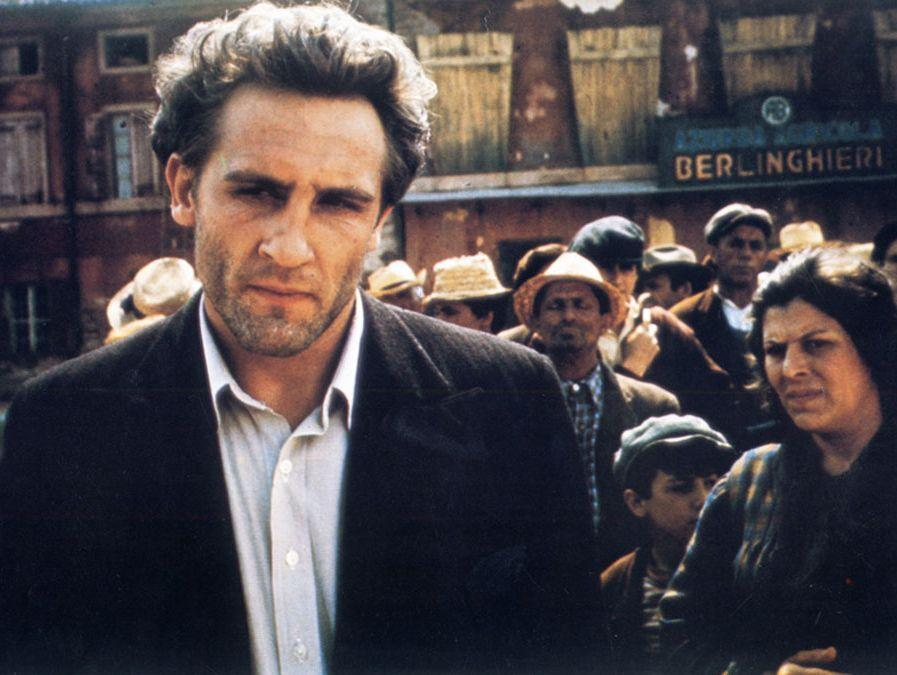
This film demonstrates what a useful concept communism was in fighting fascism in Italian society during World War II. Novecento is the story of two men, born in the same day in the same village. One is the son of a country worker (Gerard Depardieu) and the other one is the son of the landholder (Robert DeNiro). They have different social backgrounds but grow together in friendship.


Feminism


 Cambridge dictionary...
the belief that women should be allowed the same rights, power, and opportunities as men and be treated in the same way, or the set of activities intended to achieve this state:

an organized effort to give women the same economic, social, and political rights as men


What does feminism mean?

Feminism is a doctrine, or principle, that states women should have rights equal to those of men, especially social and political rights.

Because feminism is a doctrine, there are many different thoughts about what feminism actually means and how best to achieve the desired equality. There is no unified group of feminists with a single philosophy, but all feminists agree that women are somehow not treated equally to men and that they should be.

In the United States, from around 1848 through to 1920, feminism was generally concerned with women’s right to vote (known as women’s suffrage), notably starting at the Seneca Falls Convention.

From around 1960, feminism began to be concerned with women’s civil rights and questioned what women’s role in society should be. Scholars are divided on whether the second wave actually ended and, if so, when.

Starting in the 1990s, feminism started emphasizing electing women to political offices and majorly fighting against sexual harassment in the workplace. Many feminists at the time also questioned the notion of gender and the stereotypes of male and female societal roles and behavior.

Some scholars suggest in the early 2010s, feminists began to focus on furthering better treatment of women. This can be seen by the rapid spread of the Me Too movement.

Feminism  Claims

1. The basic view is that Western civilization is pervasively patriarchal

2. It is widely held that while one’s sex as a man or woman is determined by anatomy, the prevailing concepts of gender—of the traits that are conceived to constitute what is masculine and what is feminine in temperament and behavior—are largely, if not entirely, social constructs that were generated by the pervasive patriarchal biases of our civilization.

3. The further claim is that this patriarchal (or “masculinist,” or “androcentric”) ideology pervades those writings which have been traditionally considered great literature, and which until recently have been written mainly by men for men. Typically, the most highly regarded literary works focus on male protagonists—Oedipus, Ulysses, Hamlet, Tom Jones, Faust, the Three Musketeers, Captain Ahab, Huck Finn, Leopold Bloom—who embody masculine traits and ways of feeling and pursue masculine interests in masculine fields of action. 

What critic do ?

1. Rethink the canon, aiming at the rediscovery of texts written by women. 
2. Revalue women's experience. 
3. Examine representations of women in literature by men and women. 
4. Challenge representations of women as 'Other', as 'lack', as part of 'nature'. 
5. Examine power relations which obtain in texts and in life, with a view to breaking them down, seeing reading as a political act, and showing the extent of patriarchy. 
6. Recognise the role of language in making what is social and constructed seem transparent and 'natural'. 
7. Raise the question of whether men and women are 'essentially' different because of biology, or are socially constructed as different. 
8. Explore the question of whether there is a female language, an ecriture feminine, and whether this is also available to men. 
9. 'Re-read' psychoanalysis to further explore the issue of female and male identity. 
10. Question the popular notion of the death of the author, asking whether there are only 'subject positions ... constructed in discourse', or whether, on the contrary, the experience (e.g. of a black or lesbian writer) is central. 
11. Make clear the ideological base of supposedly 'neutral' or 'mainstream' literary interpretations.


critics and his works 

  • Mary Wollstonecraft’s A Vindication of the Rights of Woman (1792), 
  • John Stuart Mill’s The Subjection of Women (1869), 
  •  the American Margaret Fuller’s Woman in the Nineteenth Century (1845).
  •  Virginia Woolf A Room of One’s Own (1929)

“second-wave feminism,” was launched in France 

  1. Simone de Beauvoir’s The Second Sex (1949),
  2.  Marry Ellmann's Thinking about Women (1968),
  3. Patricia Meyer Spacks’ The Female Imagination (1975), 
  4. Ellen Moers’ Literary Women (1976), on major women novelists and poets in England, America, and France; Elaine Showalter’s A Literature of Their Own:  Brontë to Lessing (1977);
  5.  Sandra Gilbert and Susan Gubar’s The Madwoman in the Attic (1979; rev. 2000).
  6. Barbara Johnson, A World of Difference (1987); 
  7. Rita Felski, Beyond Feminist Aesthetics: Feminist Literature and Social Change (1989); and the essays in Feminism/ Postmodernism, ed. Linda J. Nicholson (1990).

Elaine Showalter named gynocriticism—that is, a criticism which concerns itself with developing a specifically female framework for dealing with works written by women, in all aspects of their production, motivation, analysis, and interpretation, and in all literary forms, including journals and letters.


Examples


1. Pink
The 2016 movie Pink raised a very important and relevant social issue- that of the importance of consent. Pink revolves around the lives of three young confident and self-dependent women- Minal, Falak and Andrea.

These three decide to attend a party at a farm house and that is where their problems begin. They get trapped in an unwanted situation and even have to go to court to prove it was ‘not their fault’ to be at a party, drink and talk to boys. (All of which are considered normal for the boys but unusual for the girls)

They have their character assassinated for no reason at all. Though it was Minal who was attacked by the man, she is presented as the perpetrator of the crime. She defends herself when the man tried to force himself on her. But throughout the court proceedings, it is presented like she was the one at fault for being attacked. Questions like why were she out so late night, what she was wearing, why she was drinking, why was she hanging out with boys are all fired on her.

It is their lawyer who ultimately wins the case by raising a very valid point- importance of consent to have sex with anyone. If a person says, NO you should stop then and there. No means No. It should never be taken lightly.

2. Thappad
3.english vnglish
4. Rudrama Devi
5.Queen
6. Jeanne Dielman, 23, Quai du Commerce, 1080 Bruxelles (1975).


The criteria for the films in this list are that they are fictional, made by women and feature female protagonists. Finally, all are made in the spirit of liberation. There are many notable films that provide stark and uncompromising images of women living under patriarchal law and male order, among them Barbara Loden’s Wanda (USA 1971) and Chantal Akerman’s  I wanted, however, to focus on films that provide images of celebration rather than endurance. Films directed by men, in spite of there being some key titles, have been excluded as female filmmakers are too often absent from this type of list.

Availability for feminist classics is scarce. Feminist films are frequently ‘disappeared’ from film culture. Where, for example, are the films of Stephanie Rothman? Why has Julie Dash’s Daughters of the Dust (1991) been so long unavailable on DVD? [Dash’s film is now restored and is available on Blu-ray].
Other filmmakers that should be mentioned in the context of feminist filmmaking are the Hollywood directors, who in the late 1970s and early 1980s were part of a new wave of feminist film, among them Joan Micklin Silver (Between the Lines, 1977), Claudia Weill (Girlfriends, 1978) and Susan Seidelman (Smithereens, 1982 and Desperately Seeking Susan, 1985).

The directors working in Britain today must also be acknowledged. Their films provide examples of interesting and often inspirational female characters. Filmmakers like Gurinder Chadha, Andrea Arnold and Carol Morley are in their own ways keeping the tradition alive.


The Mechanics of Writing

  what is Mechanics of Writing ?  The mechanics of writing refer to the technical aspects of writing, such as spelling, punctuation, grammar...