Friday, November 4, 2022

Assignments : 203 The Postcolonial Studies


Name – Janvi Nakum


Paper-  203 The Postcolonial Studies


Roll no- 11


Enrollment no –4069206420210020


Email id – janvinakum360@gmail.com


Batch- 2021-2023(M.A. Sem – 3)


Submitted to – S.B. Gardi Department of English Maharaja Krishnkumarsinhji Bhavnagar University


Frantz Fanon


Born on the island of Martinique under French colonial rule, Frantz Omar Fanon (1925–1961) was one of the most important writers in black Atlantic theory in an age of anti-colonial liberation struggle. His work drew on a wide array of poetry, psychology, philosophy, and political theory, and its influence across the global South has been wide, deep, and enduring. In his lifetime, he published two key original works: 

  • Black Skin, White Masks (Peau noire, masques blancs) in 1952 
  •  The Wretched of the Earth (Les damnés de la terre) in 1961. 
  • Collections of essays, A Dying Colonialism (L’an V de la révolution Algérienne 1959) 
  •  Toward the African Revolution (Pour la revolution Africaine), posthumously published in 1964, round out a portrait of a radical thinker in motion, moving from the Caribbean to Europe to North Africa to sub-Saharan Africa and transforming his thinking at each stop.
  •  The 2015 collection of his unpublished writings, Écrits sur l’aliénation et la liberté, will surely expand our understanding of the origins and intellectual context of Fanon’s thinking.


Fanon engaged the fundamental issues of his day: language, affect, sexuality, gender, race and racism, religion, social formation, time, and many others. His impact was immediate upon arrival in Algeria, where in 1953 he was appointed to a position in psychiatry at Bilda-Joinville Hospital. His participation in the Algerian revolutionary struggle shifted his thinking from theorizations of blackness to a wider, more ambitious theory of colonialism, anti-colonial struggle, and visions for a postcolonial culture and society. Fanon published in academic journals and revolutionary newspapers, translating his radical vision of anti-colonial struggle and decolonization for a variety of audiences and geographies, whether as a young academic in Paris, a member of the Algeria National Liberation Front (FLN), Ambassador to Ghana for the Algerian provisional government, or revolutionary participant at conferences across Africa. Following a diagnosis and short battle with leukemia, Fanon was transported to Bethesda, Maryland  for treatment and died at the National Institute for Health facility on December 6, 1961.

The Wretched of the Earth as postcolonial Studies


the 1961 publication of The Wretched of the Earth (Les damnés de la terre) changed Fanon’s global profile as a thinker of anti-colonial struggle, revolutionary action, and post-colonial statecraft and imagination.

In many ways, Wretched is a fulfillment of the short, suggestive promissory notes on anti-colonial struggle found in the many essays, editorials, and letters written in the time following Black Skin, White Masks. Those occasional writings and major essays shift focus away from anti-Blackness as a core theme and toward a broader sense of the effects of colonialism on the psyche, cultural formation, and political organization. That shift in focus allows Fanon to think more broadly about the meaning and purpose of revolutionary struggle.

"Fanon's The Wretched of the Earth: A Post-colonial Text", is mainly devoted to approaching Frantz Fanon's influential text, The Wretched of the Earth, to explain how it is considered as an apparent  representative of the post-colonial texts. This chapter concentrates on Fanon's consideration of the role of violence as an inevitable means of resistance in the colonial context. For him the colonized people's use of violence is a natural reaction to the colonizer's violence, and it is the most effective strategy of resistance that compels the colonial authority to negotiate and give the chance to the colonized to speak. This chapter highlights Fanon's call for organizing and teaching the spontaneous sectors of the resisting people to bring the people's struggle into success. Moreover, he warns the Third World peoples from the danger represented in the bourgeoisie. Due to him, this class is politically vacant and its struggle stops when given some privileges from the colonizers. He shows the importance of educating the 'spontaneous' sectors of the people politically. This chapter concentrates on Fanon's concept of nationalism and discusses his warning of the pitfalls of the concept. In addition, it sheds the light on the inter-connectedness between the national culture and the struggle for liberation.

Colonialism, Racism, and Violence

The practice of taking political control of another country with the intention of establishing a settlement and exploiting the people economically. Colonialism began in Europe around the 15th century, and it is still practiced today in some parts of the world. Fanon, a French West Indian from Martinique, a French colony located in the eastern Caribbean Sea, had a personal interest in colonialism, and his book focuses on the ways colonialism historically sought to oppress and subjugate much of the Third World through blatant racism and repeated violence. At the time Fanon wrote his book in 1961, many colonized nations were struggling for independence, and the damage of hundreds of years of racism and exploitation was acutely felt by many. The Wretched of the Earth serves as a sort of guidebook for understanding the colonized and their struggle, and in it, Fanon ultimately argues that colonialism, an inherently racist and violent practice, can only be overcome by using violence in return.

Fanon maintains that colonialism divides the world into light and dark or in this case, black and white in a process he refers to as Manichaeism. Manichaeism is a Persian religious practice from the 3rd century that is based on the basic conflict of light and dark, and, Fanon claims, it serves as the basis for the racist practice of colonialism. Since “the colonial world is a Manichaean world,” Fanon says, the colonized individual is seen as the “quintessence of evil” and is considered void of any morals or ethics. Manichaeism assumes that light the white settler represents good, whereas dark the black colonized individual represents evil. To Fanon, colonialism is rooted in this basic racist belief. Based on the same Manichaean concept, the colonial world is likewise divided into the civilized and the savage. In keeping with the themes of light and dark, the white colonist is considered civilized, and the colonized is a savage. The colonized individual is “reduced to the state of an animal” and is referred to in “zoological terms.” Under the racist practice of colonialism, the colonized individual is completely dehumanized. According to Fanon, colonial countries are further divided into two separate “sectors'': the “colonist’s sector” and the “’native’ quarters.” The colonist’s sector is clean and well maintained; but the “native” quarters, which are crowded and neglected, are “disreputable place inhabited by disreputable people.” At the very foundation of colonialism, Fanon thus argues, is a basic principle that seeks to separate and oppress people based on the color of their skin. 

Racism 

In addition to a system of racism, Fanon argues that colonialism is also a system of violence, which seeks to control and oppress the colonized through violent means. From the beginning, Fanon claims that the colonial situation “was colored by violence and their cohabitation or rather the exploitation of the colonized by the colonizer continued at the point of the bayonet and under cannon fire.” Colonial control was taken by violence and is maintained in much the same way. The colonized world which again is separated into the colonizer and the colonized is divided by military barracks and police stations. In a colonized country, Fanon says,

 “The spokesperson for the colonizer and regime of oppression, is the police officer or the soldier.” 

The mere presence of the dividing border between the worlds maintains order through intimidation and the threat of violence. Fanon argues that for the colonized, 

“all he has ever seen on his land is that he can be arrested, beaten, and starved with impunity.” 

Thus, Fanon implies, there is no end to the violence of colonialism; it doesn't stop once power is established. Rather, violence is a constant presence that is front and center in the lives of all colonized individuals. 

Violence 

Fanon refers to the widespread violence in colonial countries as “atmospheric violence,” which he claims is perpetually “rippling under the skin.” To Fanon, this constant violence is proof that colonialism cannot be overcome through peaceful or passive means. The colonized masses, Fanon asserts,

 “intuitively believe that their liberation must be achieved and can only be achieved by force.” 

For the colonized, “violence is a cleansing force,” and it also rids them of the “inferiority complex” forced upon them by the racist ideology of colonialism. As a practice rooted in violence, Fanon thus argues that colonialism must be answered in kind.


Oppression and Mental Health 

Fanon includes several cases of Algerian patients he treated for mental illness during the Algerian War of Independence. Fanon argues that their various illnesses are “psychotic reactions,” which are directly related to the stress of colonialism. Fanon includes the case file of an Algerian man known only as B, who was treated for impotence, migraines, and anorexia after his wife was raped by a French soldier. Each of B’s symptoms and conditions are in response to the violence of colonialism and the trauma of his wife’s rape. Fanon also includes the case of S, another Algerian man who was treated for “random homicidal impulses” after surviving a massacre in his small Algerian village perpetrated by the French military in 1958. Twenty-nine Algerians were killed in the massacre, and S suffered two bullet wounds. Since the massacre, S has had the urge to “kill everybody,” a desire that only began after the violent attack on his village by the French soldiers. Fanon also includes notes on a group of young Algerian children, each under the age of 10, whom he treated for adjustment disorders. The children, whose parents had been killed in the war with France, suffered from bedwetting, sleepwalking, insomnia, and anxiety, and like both S and B, their pathologies were also directly related to the psychological stress of colonialism.

Fanon also includes case notes relating to his work with colonial soldiers and officers, as well as their families, which suggests that colonialism has a negative psychological effect on both the colonized and the colonizer. Fanon includes notes on A, a young European police officer whom he treated for depression and anxiety, which began after he was expected to begin torturing Algerians on behalf of the colonial police. Like the Algerians Fanon also treated, A was likewise psychologically impacted by colonialism. Fanon, too, treated a young Frenchwoman who suffered from an anxiety disorder after her father, a civil servant, was killed during an ambush in Algeria. The Frenchwoman was disgusted and embarrassed by her father’s involvement in the oppression of the Algerian people, and she found it impossible to be proud of him. This shame is directly related to colonialism, and it has a negative effect on the young Frenchwoman’s psychological wellbeing. Lastly, Fanon includes his notes on R, a European police inspector who, after his involvement in colonialism and the oppression of the Algerian people, tortures his wife and children just as he tortured the Algerians. Like all of the patients mentioned in Fanon’s book, R suffers from a “psychotic reaction” that is directly related to colonialism.

Fanon argues colonialism

 “sows seeds of decay here and there that must be mercilessly rooted out from our land and from our minds.”

 In addition to being a moral stain on the history of Europe, Fanon underscores the psychiatric phenomena emerging from the colonial situation and advocates for colonialism to stop. Of course, at the time Fanon wrote his book in 1961, there was little evidence to suggest the colonial situation in Algeria would resolve anytime soon. “The truth is,” 

Fanon claims, 

“that colonization, in its very essence, already appeared to be a great purveyor of psychiatric hospitals.” In other words, there is no shortage of mental illness within the colonial situation.


Words : 1964

Tuesday, November 1, 2022

Queer and Eco Criticism

 This blog is about Thinking Activity on. Queer and Eco - Criticisms. This task is assigned by Prof. Dr. Dilip Barad sir, Head of the English Department of Maharaja Krishnakumarsinhji  Bhavnagar University (MKBU). As a part of the syllabus, students of English department are learning the paper called Cultural Studies.

Queer Theory

What is Queer Theory ?

Queer theory is a field of study that examines the nature of sexuality- and gender-based normativity and how society defines and polices the concepts of heterosexuality, homosexuality, and gender and sexual identities.

As a branch of gender and sexuality studies, queer theory aims to deconstruct what is acceptable or “normal.” Queer theory opens new avenues of thought to define concepts considered central to identity and identity politics.

Queer theory is a field of study that challenges existing traditional ideas about identity, sexuality, and gender – particularly that of heteronormativity, or the belief that heterosexuality is the natural, moral, or “normal” expression of sexuality. For queer theorists, heteronormativity permeates various aspects of society, is reinforced by institutions (think the Church and the legal realm), and is ultimately a way to yield power and control.

In a sense, queer theory is the study of what we as a society deem as “normal” and why these assumptions exist in the first place. It seeks to understand who benefits from and who is “othered” or isolated by these constructs.

However, in the same way that the origins of queer theory may be difficult to pinpoint, it is hard to distill the queer theory definition into a single idea or concept. Queer theory emerged from a variety of studies and cultural movements, including feminism, gay and lesbian studies, sexual subcultures, and black activism, particularly around the late 1980s and early 1990s.
What lesbian/gay critics do 
1. Identify and establish a canon of 'classic' lesbian/gay writers whose work constitutes a distinct tradition. These are, in the main, twentieth-century writers, such as (for lesbian writers in Britain) Virginia Woolf, Vita Sackville-West, Dorothy Richardson, Rosamund Lehmann, and Radclyffe Hall. 
2. Identify lesbian/gay episodes in mainstream work and discuss them as such (for example, the relationship between Jane and Helen in Jane Eyre), rather than reading same-sex pairings in non-specific ways, for instance, as symbolising two aspects of the same character (Zimmerman). 
3. Set up an extended, metaphorical sense of 'lesbian/gay' so that it connotes a moment of crossing a boundary, or blurring a set of categories. All such 'liminal' moments mirror the moment of self identification as lesbian or gay, which is necessarily an act of conscious resistance to established norms and boundaries. 
4. Expose the 'homophobia' of mainstream literature and criticism, as seen in ignoring or denigrating the homosexual aspects of the work of major canonical figures, for example, by omitting overtly homosexual love lyrics from selections or discussions of the poetry of W. H. Auden (Mark Lilly). 
5. Foreground homosexual aspects of mainstream literature which have previously been glossed over, for example the strongly homo-erotic tenderness seen in a good deal of First World War poetry. 
6. Foreground literary genres, previously neglected, which significantly influenced ideals of masculinity or femininity, such as the nineteenth-century adventure stories with a British 'Empire' setting (for example those by Rudyard Kipling and Rider Haggard) discussed by Joseph Bristow in Empire Boys (Routledge, 1991).

Essays and flim
English Literature and Male Homosocial Desire (1985) 
Epistemology of the Closet (1990)
 Diana Fuss, Essentially Speaking: Feminism, Nature, and Difference (1989); 
Richard Dyer, Now You See It: Studies on Lesbian and Gay Film (1990); 
Gregory W. Bredbeck, Sodomy and Interpretation, Marlowe to Milton (1991);
 Susan J. Wolfe and Julia Penelope, eds., New Lesbian Criticism: Literary and Cultural Readings (1992); 
Judith Butler, Bodies That Matter (1993); 
Michael Warner, ed., Fear of a Queer Planet (1993); 
Lee Edelman, Homographesis: Essays in Gay Literary and Cultural Theory (1994); 
Gregory Woods, A History of Gay Literature: The Male Tradition (1998

Examples: 
1.Kapoor and Sons


2. Ek Ladki Ko Dekha Toh Aisa Laga


3. Aligarh (2016)


Directed by Hansal Mehta, Aligrah was a LGBT movie based on a true story depicting the tragic life of Professor Ramchandra Siras (Manoj Bajpayee). Siras was the heading the department of Classical Modern Indian Languages Faculty at Aligarh Muslim University in Aligarh, Uttar Pradesh, India. Once, a local news channel barge into his home and finds him having sex with a rickshaw puller. That incident ends up changing his life forever. He’s sacked by his university and is ridiculed by society.


India's first Transgender principal in Kolkata 


Born into a lower-middle class family - her father was a factory worker, while her mother is a homemaker - Ms Bandyopadhyay went to school on the outskirts of Kolkata before heading off to a prominent city college to study Bengali. She wrote a paper on women's rights and joined a college in a remote village in a Maoist-affected region in West Bengal to teach Bengali.

Eco - Criticism


What is Eco Criticism?


Environmental criticism, also known as ecocriticism and “green” criticism is a rapidly emerging field of literary study that considers the relationship that human beings have to the environment. As Cheryll Glotfelty noted in the Introduction to The Ecocriticism Reader, “Just as feminist criticism examines language and literature form a gender-conscious perspective, and Marxist criticism brings an awareness of modes of production and economic class to its reading of texts”, environmental critics explore how nature and the natural world are imagined through literary texts. As with changing perceptions of gender, such literary representations are not only generated by particular cultures, they play a significant role in generating those cultures. Thus, if we wish to understand our contemporary attitude toward the environment, its literary history is an excellent place to start. While authors such as Thoreau and Wordsworth may first come to mind in this context, literary responses to environmental concerns are as old as the issues themselves. Deforestation, air pollution, endangered species, wetland loss, animal rights, and rampant consumerism have all been appearing as controversial issues in Western literature for hundreds, and in some cases, thousands of years.

What Ecocritics do

1. They re-read major literary works from an ecocentric perspective, with particular attention to the representation of the natural world. 
2. They extend the applicability of a range of ecocentric concepts, using them of things other than the natural world -concepts such as growth and energy, balance and imbalance, symbiosis and mutuality, and sustainable or unsustainable uses of energy and resources. 
3. They give special canonical emphasis to writers who foreground nature as a major part of their subject matter, such as the American transcendentalists, the British Romantics, the poetry of John Clare, the work of Thomas Hardy and the Georgian poets of the early twentieth century. 
4. They extend the range of literary-critical practice by placing a new emphasis on relevant 'factual' writing, especially reflective topographical material such as essays, travel writing, memoirs, and regional literature. 
5. They turn away from the 'social constructivism' and 'linguistic determinism' of dominant literary theories (with their emphasis on the linguistic and social constructedness of the external world) and instead emphasise ecocentric values of meticulous observation, collective ethical responsibility, and the claims of the world beyond ourselves.

Critics and his works 
  • The Future of Environmental Criticism by Lawrence Buell.
  • Walden, or Life in the Woods by Henry David Thoreau.
  • Ecology Without Nature by Timothy Morton.
  • Politics of Nature by Bruno Latour.
  • Silent Spring by Rachel Carson.
  • The Comedy of Survival by Joseph W.
  • James Thomson's The Seasons (1730), 
  • Thomas Gray's 'Elegy in a Country Churchyard' (1751), 
  • William Cowper's The Task (1785),
Example
Poem :Fire and Ice by Robert Frost


Throughout history, there has always been a seeming fascination with how the world will end. In recent years, these discussions have centered around nuclear disaster, immense climate change, and general cynicism. Two thousand years ago (give or take), the Revelations chapter was added into the Christian Bible, detailing a prophetic vision of the end of the world. This has long been a topic embedded in the human psyche. At some point between the present and Revelations’ authorship (closer to the present though), Robert Frost added his own ideas to the mix, and the result was Fire and Ice, one of his most well-known poems, and certainly one of his most powerful ones. This poem is known for its simplicity and biting message, as well as its call to stop and think, offering a different perspective on the end of everything.

The disagreement in general society on the topic of how the world ends. In a modern sense, “fire” and “ice” could well be stand-ins for “nuclear disaster” and “climate change.” Frost’s use of “fire” and “ice,” however, is largely a metaphoric decision that opens the poem up to different kinds of interpretation. Ice and fire, of course, are opposites of one another, suggesting that most people have entirely opposing views on the apocalypse — after all, the world can’t end in ice and fire at the same time. Ice and fire also represent two extremes which, on a grand enough scale, could cause immense damage, and are fitting metaphors for harbingers of death.


Monday, October 31, 2022

Marxist and Feminism

This blog is about Thinking Activity on. Marxist Theory and Feminism. This task is assigned by Prof. Dr. Dilip Barad sir, Head of the English Department of Maharaja Krishnakumarsinhji  Bhavnagar University (MKBU). As a part of the syllabus, students of English department are learning the paper called Cultural Studies.


Marxist Definition according Oxford dictionary...

The political and economic theories of Karl Marx (1818-83), which explain the changes and developments in society as the result of opposition between the social classes.

The political and economic theories of the German political philosopher and economists Karl Marx (1818–83) and Friedrich Engels (1820–95), later developed by their followers to form the basis for the theory and practice of communism.

Central to Marxist theory is an explanation of social change in terms of economic factors, according to which the means of production provide the economic base which influences or determines the political and ideological superstructure. Marx and Engels predicted the revolutionary overthrow of capitalism by the proletariat and the eventual attainment of a classless communist society.

Marxism is both a social and political theory, which encompasses Marxist class conflict theory and Marxian economics. Marxism was first publicly formulated in 1848 in the pamphlet The Communist Manifesto by Karl Marx and Friedrich Engels, which lays out the theory of class struggle and revolution. Marxian economics focuses on the criticisms of capitalism, which Karl Marx wrote about in his book Das Kapital, published in 1867.

Generally, Marxism argues that capitalism as a form of economic and social reproduction is inherently unfair and flawed, and because of this will ultimately fail. Capitalism is defined as a mode of production whereby business owners (capitalists) own all of the means of production - the factory, the tools and machinery, the raw materials, the final product, and the profits earned from their sale - while workers (labor) are hired for wages and have no claim on those things. Moreover, the wages paid to workers are lower than the economic value that their work creates for the capitalist. This surplus labor is the source of capitalists' profits, and is the root of the inherent class struggle between labor and capital.

  • Marxism is a social, economic, and political theory that examines the causes and effects of capitalism and promotes communism as an alternative.
  • Karl Marx and Friedrich Engels, two German philosophers, proposed this theory in 1848 to explain the class conflict between capitalists (Bourgeois) and laborers (Proletariat).
  • This theory suggests that the growing struggles between the social classes will eventually culminate in a revolution led by the proletariat, overturning the bourgeois and seizing control of the economy.
  • Marx argued that class conflicts might have considerably more societal consequences than the theory predicts. However, due to increased competition, consumption, demand and supply, and wages, the globe has witnessed a revolution in the industry.

Marxist follow 

1. In the Marxist literary analysis, the evolving history of humankind, of its social groupings and interrelations, of its institutions, and of its ways of thinking are largely determined by the changing mode of its “material production”— that is, of its overall economic organization for producing and distributing material goods. 

2. Changes in the fundamental mode of material production effect changes in the class structure of a society, establishing in each era dominant and subordinate classes that engage in a struggle for economic, political, and social advantage. 

3. Human consciousness is constituted by an ideology—that is, the beliefs, values, and ways of thinking and feeling through which human beings perceive, and by recourse to which they explain, what they take to be reality. An ideology is, in complex ways, the product of the position and interests of a particular class. In any historical era, the dominant ideology embodies, and serves to legitimize and perpetuate, the interests of the dominant economic and social class.

Marxism also class conflict between rich and poor people and rich class and servant class people. find out class conflict with example 


Critic and his works

The Hungarian Thinker Georg Lukacs
Theodor Adorno and Max Horkheimer
Bertolt Brecht and Walter Benjamin
French Marxist Louis Althusser
Pierre Macherey in A Theory of Literary Production
Italian Communist Antonio Gramsci  : 1929 and 1935
Stuart Hall
Ernesto Laclau and Chantal Mouffe : hegemony and Socialist Strategy (1985)
In England the many social and critical writings : Raymond Williams
A leading theorist of Marxist criticism in England  : Terry Eagleton
Fredric Jameson : The Political Unconscious : Narrative as a Socially Symbolic Act 1981

Marxism also class conflict between rich and poor people and rich class and servant class people. find out class conflict with example

👉Capitalist society is made up of two classes: the bourgeoisie, or business owners, who control the means of production, and the proletariat, or workers, whose labor transforms raw commodities into valuable economic goods.
👉Ordinary laborers, who do not own the means of production, such as factories, buildings, and materials, have little power in the capitalist economic system. Workers are also readily replaceable in periods of high unemployment, further devaluing their perceived worth.
👉To maximize profits, business owners have an incentive to get the most work out of their laborers while paying them the lowest possible wages. This creates an unfair imbalance between owners and laborers, whose work the owners exploit for their own gain.
👉Because workers have little personal stake in the process of production, Marx believed they would become alienated from it, as well as from their own humanity, and turn resentful toward business owners.
👉The bourgeoisie also leverage social institutions, including government, media, academia, organized religion, and banking and financial systems, as tools and weapons against the proletariat with the goal of maintaining their position of power and privilege.
👉Ultimately, the inherent inequalities and exploitative economic relations between these two classes will lead to a revolution in which the working class rebels against the bourgeoisie, takes control of the means of production, and abolishes capitalism.

Coolie written by Mulk raj Anand 


In Hindi Cinema find some examples between class conflict:
1. coolie : In symbol is a hammer and sickle as Marxist 
 
2. Namak halaal : In film also two friends belong to different class 

3.Namak Haram ; In film servant and Malik (rich and poor family)


Example of Marxism 


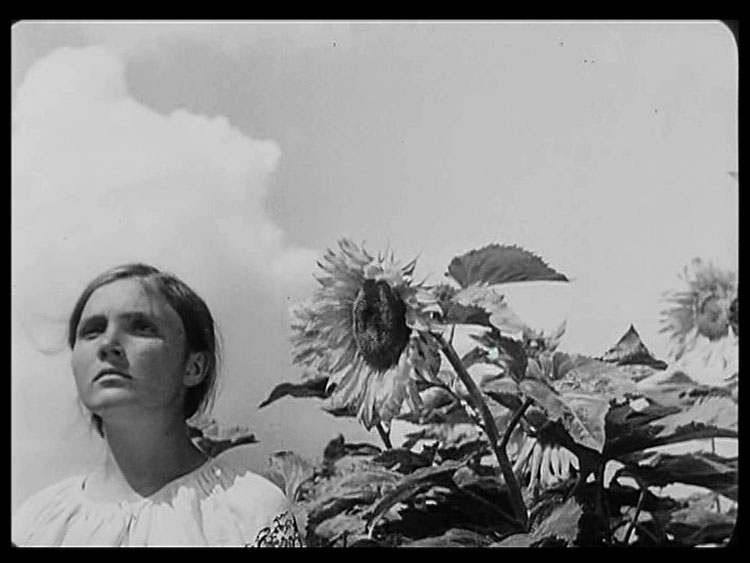
1. Earth (Alexander Dovzhenko, 1930)


2. Porcile (Pier Paolo Pasolini, 1969)


3. Modern Times : Charlie cephalin 

A classic movie by Charlie Chaplin is a Marxist film? Chaplin was always sensitive to social problems. England has always been the land of socialist battles. Highgate cemetery is a sufficient proof of how deeply related England is to Marx’s life.

This film could be seen as a social accusation toward industrialization . If one wants to better understand what proletariat alienation is, this is the film to see. This movie is based on a simple concept which it explains well through stereotypical and ironic characters.

A society that works in a crazy context cannot be fit for man, who continuously searches to be free. If it is only a critical film more than constructive one, it reflects a particular aspect of industrial proletariat problems, a very old problem that is a socialist vindication but at the same time, is the basis of Marx’s philosophy.


4. Three Songs about Lenin (Dziga Vertov, 1934)


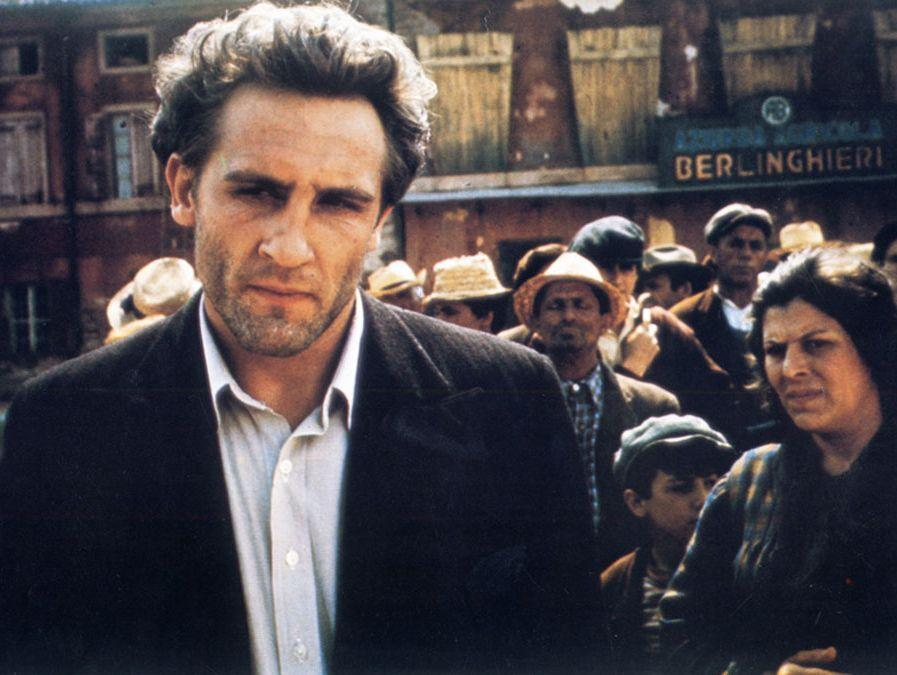
Novecento (Bernardo Bertolucci, 1976)


This film demonstrates what a useful concept communism was in fighting fascism in Italian society during World War II. Novecento is the story of two men, born in the same day in the same village. One is the son of a country worker (Gerard Depardieu) and the other one is the son of the landholder (Robert DeNiro). They have different social backgrounds but grow together in friendship.


Feminism


 Cambridge dictionary...
the belief that women should be allowed the same rights, power, and opportunities as men and be treated in the same way, or the set of activities intended to achieve this state:

an organized effort to give women the same economic, social, and political rights as men


What does feminism mean?

Feminism is a doctrine, or principle, that states women should have rights equal to those of men, especially social and political rights.

Because feminism is a doctrine, there are many different thoughts about what feminism actually means and how best to achieve the desired equality. There is no unified group of feminists with a single philosophy, but all feminists agree that women are somehow not treated equally to men and that they should be.

In the United States, from around 1848 through to 1920, feminism was generally concerned with women’s right to vote (known as women’s suffrage), notably starting at the Seneca Falls Convention.

From around 1960, feminism began to be concerned with women’s civil rights and questioned what women’s role in society should be. Scholars are divided on whether the second wave actually ended and, if so, when.

Starting in the 1990s, feminism started emphasizing electing women to political offices and majorly fighting against sexual harassment in the workplace. Many feminists at the time also questioned the notion of gender and the stereotypes of male and female societal roles and behavior.

Some scholars suggest in the early 2010s, feminists began to focus on furthering better treatment of women. This can be seen by the rapid spread of the Me Too movement.

Feminism  Claims

1. The basic view is that Western civilization is pervasively patriarchal

2. It is widely held that while one’s sex as a man or woman is determined by anatomy, the prevailing concepts of gender—of the traits that are conceived to constitute what is masculine and what is feminine in temperament and behavior—are largely, if not entirely, social constructs that were generated by the pervasive patriarchal biases of our civilization.

3. The further claim is that this patriarchal (or “masculinist,” or “androcentric”) ideology pervades those writings which have been traditionally considered great literature, and which until recently have been written mainly by men for men. Typically, the most highly regarded literary works focus on male protagonists—Oedipus, Ulysses, Hamlet, Tom Jones, Faust, the Three Musketeers, Captain Ahab, Huck Finn, Leopold Bloom—who embody masculine traits and ways of feeling and pursue masculine interests in masculine fields of action. 

What critic do ?

1. Rethink the canon, aiming at the rediscovery of texts written by women. 
2. Revalue women's experience. 
3. Examine representations of women in literature by men and women. 
4. Challenge representations of women as 'Other', as 'lack', as part of 'nature'. 
5. Examine power relations which obtain in texts and in life, with a view to breaking them down, seeing reading as a political act, and showing the extent of patriarchy. 
6. Recognise the role of language in making what is social and constructed seem transparent and 'natural'. 
7. Raise the question of whether men and women are 'essentially' different because of biology, or are socially constructed as different. 
8. Explore the question of whether there is a female language, an ecriture feminine, and whether this is also available to men. 
9. 'Re-read' psychoanalysis to further explore the issue of female and male identity. 
10. Question the popular notion of the death of the author, asking whether there are only 'subject positions ... constructed in discourse', or whether, on the contrary, the experience (e.g. of a black or lesbian writer) is central. 
11. Make clear the ideological base of supposedly 'neutral' or 'mainstream' literary interpretations.


critics and his works 

  • Mary Wollstonecraft’s A Vindication of the Rights of Woman (1792), 
  • John Stuart Mill’s The Subjection of Women (1869), 
  •  the American Margaret Fuller’s Woman in the Nineteenth Century (1845).
  •  Virginia Woolf A Room of One’s Own (1929)

“second-wave feminism,” was launched in France 

  1. Simone de Beauvoir’s The Second Sex (1949),
  2.  Marry Ellmann's Thinking about Women (1968),
  3. Patricia Meyer Spacks’ The Female Imagination (1975), 
  4. Ellen Moers’ Literary Women (1976), on major women novelists and poets in England, America, and France; Elaine Showalter’s A Literature of Their Own:  Brontë to Lessing (1977);
  5.  Sandra Gilbert and Susan Gubar’s The Madwoman in the Attic (1979; rev. 2000).
  6. Barbara Johnson, A World of Difference (1987); 
  7. Rita Felski, Beyond Feminist Aesthetics: Feminist Literature and Social Change (1989); and the essays in Feminism/ Postmodernism, ed. Linda J. Nicholson (1990).

Elaine Showalter named gynocriticism—that is, a criticism which concerns itself with developing a specifically female framework for dealing with works written by women, in all aspects of their production, motivation, analysis, and interpretation, and in all literary forms, including journals and letters.


Examples


1. Pink
The 2016 movie Pink raised a very important and relevant social issue- that of the importance of consent. Pink revolves around the lives of three young confident and self-dependent women- Minal, Falak and Andrea.

These three decide to attend a party at a farm house and that is where their problems begin. They get trapped in an unwanted situation and even have to go to court to prove it was ‘not their fault’ to be at a party, drink and talk to boys. (All of which are considered normal for the boys but unusual for the girls)

They have their character assassinated for no reason at all. Though it was Minal who was attacked by the man, she is presented as the perpetrator of the crime. She defends herself when the man tried to force himself on her. But throughout the court proceedings, it is presented like she was the one at fault for being attacked. Questions like why were she out so late night, what she was wearing, why she was drinking, why was she hanging out with boys are all fired on her.

It is their lawyer who ultimately wins the case by raising a very valid point- importance of consent to have sex with anyone. If a person says, NO you should stop then and there. No means No. It should never be taken lightly.

2. Thappad
3.english vnglish
4. Rudrama Devi
5.Queen
6. Jeanne Dielman, 23, Quai du Commerce, 1080 Bruxelles (1975).


The criteria for the films in this list are that they are fictional, made by women and feature female protagonists. Finally, all are made in the spirit of liberation. There are many notable films that provide stark and uncompromising images of women living under patriarchal law and male order, among them Barbara Loden’s Wanda (USA 1971) and Chantal Akerman’s  I wanted, however, to focus on films that provide images of celebration rather than endurance. Films directed by men, in spite of there being some key titles, have been excluded as female filmmakers are too often absent from this type of list.

Availability for feminist classics is scarce. Feminist films are frequently ‘disappeared’ from film culture. Where, for example, are the films of Stephanie Rothman? Why has Julie Dash’s Daughters of the Dust (1991) been so long unavailable on DVD? [Dash’s film is now restored and is available on Blu-ray].
Other filmmakers that should be mentioned in the context of feminist filmmaking are the Hollywood directors, who in the late 1970s and early 1980s were part of a new wave of feminist film, among them Joan Micklin Silver (Between the Lines, 1977), Claudia Weill (Girlfriends, 1978) and Susan Seidelman (Smithereens, 1982 and Desperately Seeking Susan, 1985).

The directors working in Britain today must also be acknowledged. Their films provide examples of interesting and often inspirational female characters. Filmmakers like Gurinder Chadha, Andrea Arnold and Carol Morley are in their own ways keeping the tradition alive.


Thursday, September 29, 2022

The home and the world


For My Passionate Eyes
A Love Poem by Janvi
Roses are red,
Violets are blue,
A soul is passionate,
And so are you.

Orchids are white,
Ghost ones are rare,
Sides are straight,
And so is your hair.

Magnolia grows,
With buds like eggs,
The ocean is beautiful,
And so are your legs.

Sunflowers reach,
Up to the skies,
A paper is yellow,
And so are your eyes.

Foxgloves in hedges,
Surround the farms,
Surfaces are smooth,
And so are your arms.

Daisies are pretty,
Daffies have style,
The beauty is dazzling,
And so is your smile.

Eyes are beautiful,
Just like you.


আমার আবেগী চোখের জন্য
জানভির একটি প্রেমের কবিতা
লাল গোলাপ,
বেগুনীই নীল,
একটি আত্মা উত্সাহী,
আর তুমিও.

অর্কিড সাদা,
ভূত বিরল,
পাশ সোজা,
এবং তাই আপনার চুল.

ম্যাগনোলিয়া বৃদ্ধি পায়,
ডিমের মতো কুঁড়ি দিয়ে,
সাগর সুন্দর,
এবং তাই আপনার পা.

সূর্যমুখী পৌঁছায়,
আকাশ পর্যন্ত,
একটি কাগজ হলুদ,
এবং তাই আপনার চোখ.

হেজেসে ফক্সগ্লোভস,
ঘেরা খামার,
পৃষ্ঠতল মসৃণ,
এবং তাই আপনার অস্ত্র.

ডেইজি সুন্দর,
ড্যাফির স্টাইল আছে,
সৌন্দর্য ঝলমলে,
আর তাই তোমার হাসি।

চোখ সুন্দর,
ঠিক তোমার মত.

https://www.poem-generator.org.uk/
Āmāra ābēgī cōkhēra jan'ya
jānabhira ēkaṭi prēmēra kabitā
lāla gōlāpa,
bēgunī'i nīla,
ēkaṭi ātmā utsāhī,
āra tumi'ō.

Arkiḍa sādā,
bhūta birala,
pāśa sōjā,
ēbaṁ tā'i āpanāra cula.

Myāganōliẏā br̥d'dhi pāẏa,
ḍimēra matō kum̐ṛi diẏē,
sāgara sundara,
ēbaṁ tā'i āpanāra pā.

Sūryamukhī paum̐chāẏa,
ākāśa paryanta,
ēkaṭi kāgaja haluda,
ēbaṁ tā'i āpanāra cōkha.

Hējēsē phaksaglōbhasa,
ghērā khāmāra,
pr̥ṣṭhatala masr̥ṇa,
ēbaṁ tā'i āpanāআমার আবেগী চোখের জন্য
জানভির একটি প্রেমের কবিতা
লাল গোলাপ,
বেগুনীই নীল,
একটি আত্মা উত্সাহী,
আর তুমিও.

অর্কিড সাদা,
ভূত বিরল,
পাশ সোজা,
এবং তাই আপনার চুল.

ম্যাগনোলিয়া বৃদ্ধি পায়,
ডিমের মতো কুঁড়ি দিয়ে,
সাগর সুন্দর,
এবং তাই আপনার পা.

সূর্যমুখী পৌঁছায়,
আকাশ পর্যন্ত,
একটি কাগজ হলুদ,
এবং তাই আপনার চোখ.

হেজেসে ফক্সগ্লোভস,
ঘেরা খামার,
পৃষ্ঠতল মসৃণ,
এবং তাই আপনার অস্ত্র.

ডেইজি সুন্দর,
ড্যাফির স্টাইল আছে,
সৌন্দর্য ঝলমলে,
আর তাই তোমার হাসি।

চোখ সুন্দর,
ঠিক তোমার মত.

https://www.poem-generator.org.uk/
Āmāra ābēgī cōkhēra jan'ya
jānabhira ēkaṭi prēmēra kabitā
lāla gōlāpa,
bēgunī'i nīla,
ēkaṭi ātmā utsāhī,
āra tumi'ō.

Arkiḍa sādā,
bhūta birala,
pāśa sōjā,
ēbaṁ tā'i āpanāra cula.

Myāganōliẏā br̥d'dhi pāẏa,
ḍimēra matō kum̐ṛi diẏē,
sāgara sundara,
ēbaṁ tā'i āpanāra pā.

Sūryamukhī paum̐chāẏa,
ākāśa paryanta,
ēkaṭi kāgaja haluda,
ēbaṁ tā'i āpanāra cōkha.

Hējēsē phaksaglōbhasa,
ghērā khāmāra,
pr̥ṣṭhatala masr̥ṇa,
ēbaṁ tā'i āpanāra astra.

Tuesday, September 27, 2022

CS and Feminism - Cyberfeminism: Artificial Intelligence and the Unconscious Biases

 This blog is about Thinking Activity on. This task is assigned by Prof. Dr. Dilip Barad sir, Head of the English Department of Maharaja Krishnakumarsinhji  Bhavnagar University (MKBU). As a part of the syllabus, students of English department are learning the paper called Cultural Studies.

Cyberfeminism is a feminist approach which foregrounds the relationship between cyberspace, the Internet, and technology. The term was coined in the early 1990s to describe the work of feminists interested in theorizing, critiquing, exploring and re-making the Internet, cyberspace and new-media technologies in general.

1. Kirti Sharma: How to keep human bias out of AI?


Women are behind men in artificial life. There are all the reasons. In our country, the patriarchal country, the importance of man is considered special. When the importance of woman is considered of low type. This is not only in India but also in many other countries of the world. Which has been going on for a long time. But nowadays women have come forward, taking leadership. But there are still some women who are backward. In which some things seem to be only for men. Which is continuous from time to time. Women need a man to do something of their own. Women need the support of men. Like till the date some girls have not their own Gmail Id, Facebook Id and so many things. So patriarchy is also described. Women or girls make a fake Id on Facebook to hide their gender because they don’t want any kind of hurdles. It creates an impression in one's mind that it cannot work without him.


2. Robin Hauser: Can we protect AI from our biases?


Now In the World Compare to men and women to use a social media more then men. some culture and society not to allowed to use social media for women and we allowed social media but not any post or photo related her life and she not use her name in Id. some woman use Id her husband or Brother name. because told them social media not safe for woman's. Now many cyber case happened in real life and happened with the woman. social tougher woman harassment increase.

Our experience of cyber space and women's identity.

Cyberfeminism is a very interesting term for discussing and thinking. It's very interesting to see that still some women are facing some kind of problem  Technology with social media and they are getting afraid of using such a thing. So we have to write our own experience about cyber feminism. I had the same experience when I started Facebook, Instagram so at that time I hid my profile and my identity  because I was afraid that I might be talking wrong. Slowly and steadily we are coming out from this kind of fear.

culture studies : speed and the counter cultuer of slow Movement

 This blog is about Thinking Activity on  Why are We so Scared of Robots / AIs?. This task is assigned by Prof. Dr. Dilip Barad sir, Head of the English Department of Maharaja Krishnakumarsinhji  Bhavnagar University (MKBU). As a part of the syllabus, students of English department are learning the paper called Cultural Studies.

Paul Virilio - Dromology

The word Dromology is derived from Greek noun 'Dromos' which is used for race or racetrack. With this meaning in his mind he coined the term Dromology which means "Science of Speed" According to Virilio Speed became the soul agent of progress. He further said that…..


"There was no industrial revolution, 

only Dromocratic Revolution, 

There is no Democracy only Democracy, 

There is no Strategy only Dromology."

With the help of technology and computers we can communicate with people from any corner within no time. But Virilio is Critical of thought and said that technologies distorting 'Real' reality by replacing real time and space with "Virtual Realities."

A German sociologist, Ulrich Beck propounded the term Technoulture in his book Risk Society: Towards a New Modernity. He further explains how risk theory works in various cultural artefacts like, in cyber world we find computer anti-virus software are sold on the grounds of risk and threats of bug attacks. Things which are governed by risk becomes the risk society. Beck explains that risk are not real but they are about becoming real. When a certain risk is predicted, it is just an assumption of future incident. But when risk becomes real it becomes a disaster or catastrophe.

Why are we so scared of Robots

 This blog is about Thinking Activity on  Why are We so Scared of Robots / AIs?. This task is assigned by Prof. Dr. Dilip Barad sir, Head of the English Department of Maharaja Krishnakumarsinhji  Bhavnagar University (MKBU). As a part of the syllabus, students of English department are learning the paper called Cultural Studies.


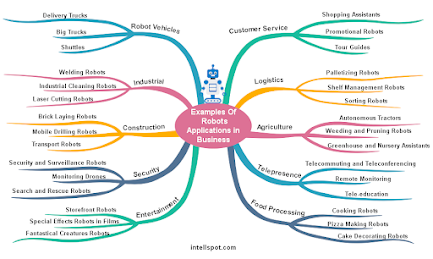
 Robot

According to Britannica :

robot, any automatically operated machine that replaces human effort, though it may not resemble human beings in appearance or perform functions in a humanlike manner. By extension, robotics is the engineering discipline dealing with the design, construction, and operation of robots.

Why are We so Scared of Robots ?

we use robot in every field for a good purpose and robot work fast and very well no mistake in his work but unfortunately some time robot is dangerous our life and another side people is worked not well and slowly. people have many mistakes in work. Another side robot replace a people place in work but robot is good as well as dangerous for all human beings.

Why are we so Scared :

1. Robot take our job

Automation’s reputation can make us fear for future levels of employment. We see this example most starkly in car manufacturing. General Motors, Toyota, and BMW previously employed thousands of welders, mechanics, and more. Now vast swathes of the automotive industry operate without human intervention.

In the long-term view, automation limits neither profit nor growth. While the American auto-manufacturing workforce is only at 70% of its turn-of-the-millennium size, it is contributing far more to the US economy than previous years.

Why take our jog by robot?

Robot is a machine and he work 

2. Robot take over

From Mary Shelly’s Frankenstein, to the Wachowski’s Matrix films. Popular culture tells terrifying tales of robots turning against us. What makes us imagine this? Why do we retell stories of robotic rebellion so often?

If robots are unpaid workers, wouldn’t we rebel in their shoes? While we know robots are not people, on some level we cannot help assigning them human traits, especially as they are doing more and more of ‘our’ work. As they become more autonomous, more intelligent, and more capable, we start wondering things like “What if they become self-aware?”

In Literature we use in Mary Shelly's Frankenstein as a monster but he is not a real monster he created by protagonist and not accept society or Protagonist. so, he revenge and dangerous for human like as well as robot.

 What is artificial intelligence (AI)?

Artificial Intelligence is the ability of computers/machines to perform tasks that usually people perform. For example, the ability to learn, make decisions, and solve problems.

AI works via special software and includes algorithms and technologies that allow machines to learn from experience and adjust their actions without human intervention.

The purpose of artificial intelligence is to take actions that have the best chance of achieving a specific goal.

Artificial Intelligence is growing more sophisticated by the day, and this can have risks ranging from mild to catastrophic existential risks. The level of risk imposed by Artificial Intelligence is so heavily debated because there’s a general lack of understanding regarding Artificial Intelligence.


It is generally thought that Artificial Intelligence can be dangerous in two ways:

1.The Artificial Intelligence is programmed to do something malicious.

2.The artificial Intelligence is programmed to be beneficial but does something destructive while achieving its goal.

 Here Three short films based on science fiction on AIS Robert to Scare.

1. The first Short Film about Babysitter Robot

2.The second short Film about A mother leaves her kids to the care of a robot. The  iMom.

3. The third is Anukul Saatyajit Ray and Sujoy Ghosh. Royal Stag Barrel Select Large Short Films.


This video about the  robot and human. How to use robot a care taker his boy. In video robot is dangerous for a human being because mother replace robot a new robot and robot came back to revenge with the human. so, sometimes technology is a better then human but technology is dad for human. the reason is use technology good purpose but sometimes result is not good. like robot use any fields replace the human because compare the human and robot a better then human. some technology depends use a people. one more think robot not built the emotions like humans.


 This a short movie video about iMom.  The whole video around the replace the human artificial intelligence. In video a iMom like a revive the real mom like. iMom Not necessarily a evil as printed a conversation Sam and iMom. Sam is a innocent child like a sheep and iMom not evil like a wolf. Now in the world bought the human technology and artificial intelligence, created humans and sponsor. In end the video iMom kill the baby so she is a evil foe a humanity and human. Technology only replace the human not replace the human emotions and humanity. iMom is a not a good or dad ended the killing a baby.


Anukul a very interesting short movie by Satyajit Ray, tells the story of why humans are afraid of robot.
In video one character a  role retired man a Nikul and he alone his life so he purchased one robot for his company. robot name is a Anukul. Nikul is face the conflict and end of the video Anukul killed him. robot is a second violent attempt will be faced by electrocution.
  

The Mechanics of Writing

  what is Mechanics of Writing ?  The mechanics of writing refer to the technical aspects of writing, such as spelling, punctuation, grammar...